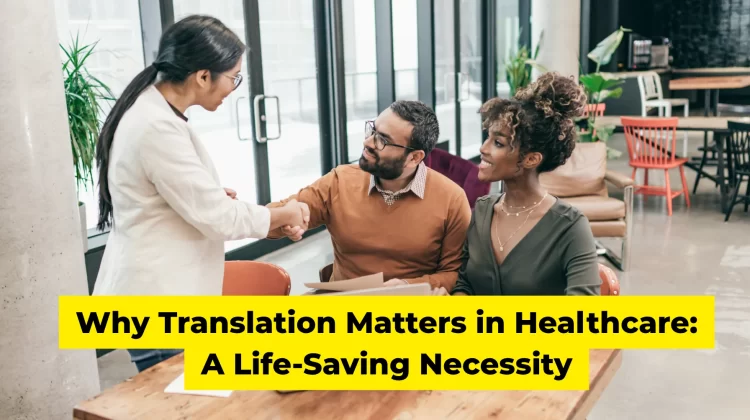
Why Translation Matters in Healthcare: A Life-Saving Necessity
In today’s world, healthcare and language access are deeply connected. Yet, for many patients, accessing quality healthcare becomes a struggle not because of the quality of care available, but because they can’t understand what’s being said. Whether it’s instructions from a doctor, a medication label, or a hospital consent form, accurate communication can be the difference between safety and danger. That’s where translation comes in, playing a life-saving role that too often flies under the radar.
If you’ve ever wondered why translation matters in healthcare, the answer is simple: because lives depend on it. And that’s not an exaggeration.
The Everyday Challenges of Multilingual Healthcare
Imagine walking into a hospital with a high fever, not understanding the language spoken, and having no idea what the doctor is telling you. Now imagine trying to explain your symptoms, your allergies, or the medications you’re already taking with no interpreter present and no translated materials. It’s stressful at best, dangerous at worst.
For millions of people in the U.S. and around the world, this is a reality. Immigrants, refugees, and even tourists can find themselves in life-threatening situations due to language barriers. Healthcare providers, meanwhile, face added challenges in ensuring that they’ve understood patients correctly, documented everything appropriately, and obtained valid informed consent.
This is why medical translation is not just a convenience it’s an ethical and professional obligation.
Translation vs. Interpretation: Let’s Clear That Up
Before we dive deeper, let’s clarify a common confusion: translation and interpretation are not the same. Translation deals with written content forms, instructions, records, and labels. Interpretation refers to real-time verbal communication, like during a doctor’s visit or an emergency call.
Both are critical, and in most medical settings, they’re used together to ensure full access to information.
The Risks of Getting It Wrong
Poor or absent translation in healthcare can lead to some serious consequences:
- Misdiagnosis: A patient unable to explain symptoms accurately or who receives a mistranslated explanation may be misdiagnosed.
- Medication errors: Incorrectly translated dosage or medication instructions can lead to dangerous side effects or ineffective treatment.
- Informed consent violations: Patients must understand the risks and benefits of treatment to give valid consent. If consent forms aren’t translated, it opens the door to legal and ethical violations.
- Poor follow-up care: Discharge instructions that aren’t clear can lead to re-hospitalizations or complications.
- Patient distrust: When patients don’t feel understood, their trust erodes. They may avoid seeking care altogether.
The stakes are just too high to take shortcuts.
Why Translation Matters in Healthcare: Beyond the Clinic Room
Now let’s talk about the bigger picture. Translation doesn’t just help individual patients. It strengthens entire healthcare systems by ensuring consistency, improving outcomes, and reducing legal risk.
Hospitals and health systems with robust translation practices see fewer malpractice claims, better patient compliance, and higher satisfaction scores. Public health departments that translate vaccination notices, emergency alerts, or health education campaigns are more successful in reaching vulnerable populations.
It also helps bridge healthcare disparities. Marginalized communities often face greater health risks and language access plays a huge part in closing those gaps.
Government Translation Services Importance
When we zoom out even further, we see how translation intersects with government services. In fact, government translation services importance is something that can’t be overstated especially in public health.
Here’s why:
- Legal compliance: In the U.S., Title VI of the Civil Rights Act requires federally funded healthcare providers to offer language access. That means hospitals, Medicaid clinics, and public health programs must provide translation and interpretation services.
- Public trust: When government health agencies release information in multiple languages, they build trust with the communities they serve. This trust is crucial during health crises like the COVID-19 pandemic.
- Disaster response: Think of wildfires, hurricanes, or pandemics. Multilingual public health alerts and translated emergency instructions can save thousands of lives.
- Policy transparency: Patients need to understand their rights, healthcare policies, insurance options, and medical procedures especially when those services are provided or funded by the government.
Unfortunately, government translation services are often underfunded or overlooked, leaving non-English-speaking communities without access to vital information. That’s something we urgently need to fix.
Common Healthcare Documents That Require Translation
Let’s get practical. What exactly needs to be translated in healthcare settings? Quite a lot.
Here are just a few examples:
- Patient intake and registration forms
- Informed consent documents
- Medication labels and instructions
- Discharge summaries and follow-up care plans
- Educational brochures
- Insurance forms and billing documents
- Lab reports and diagnostic results
And beyond the clinical space, government-issued materials such as vaccination guides, food safety notices, or public health regulations should also be translated to ensure full access.
The Human Element: Why Professionals Still Matter
You might wonder: can’t we just use Google Translate or AI tools? The short answer? No. The long answer? Absolutely not in critical settings like healthcare.
While AI translation tools have come a long way, they’re far from perfect especially when it comes to context, nuance, or technical language. A mistranslated word in a restaurant menu might lead to a funny story. In a hospital, it can lead to a tragedy.
Human translators bring expertise, cultural understanding, and accountability. They can identify potentially confusing or offensive terms, ask questions when something is unclear, and make culturally appropriate choices. No machine can fully replace that.
Cultural Competence: Translation Is Not Just About Language
Another key point: effective healthcare translation must be culturally competent. That means understanding how culture influences a patient’s beliefs, decisions, and communication style.
For example, in some cultures, it’s taboo to speak directly about death or terminal illness. In others, patients may expect family members, not the patient themselves, to receive health information first.
Good translators don’t just translate words; they adapt the message so it’s received respectfully and effectively. This is especially important in mental health, reproductive health, and end-of-life care, where cultural sensitivity is vital.
The Business Case for Translation in Healthcare
We’ve talked a lot about safety and ethics but let’s be real. There’s also a strong business case for healthcare organizations to invest in professional translation.
- Reduced liability: Clear documentation lowers legal risk
- Improved patient retention: Patients who feel understood are more likely to return for follow-up care
- Efficient operations: Staff waste less time clarifying forms or redoing procedures due to misunderstandings
- Positive reputation: Culturally inclusive care helps build your brand in diverse communities
Simply put, healthcare providers can’t afford not to prioritize translation.
How VMLA Can Help
At VM Language Access, we understand that quality translation is not just a service, it’s a responsibility. Our experienced medical translators and interpreters work closely with clinics, hospitals, and public health agencies to ensure every word is accurate, clear, and culturally respectful.
Whether you need consent forms translated into Spanish, public health brochures in Haitian Creole, or a medical interpreter for a virtual telehealth appointment, we’ve got you covered. We don’t just speak the language, we speak healthcare.
So, why does translation matter in healthcare? Because every patient deserves to be heard and understood regardless of the language they speak. Because a missed word can mean a missed diagnosis. Because clear communication builds safer, more effective, and more inclusive healthcare systems.
And because, ultimately, translation saves lives.
If you’re a healthcare provider, government agency, or nonprofit seeking to break down language barriers, don’t wait until it’s too late. Translation isn’t just about words. It’s about access, equity, and care.
Let VMLA help you make your communication truly global because everyone deserves to understand, and to be understood.