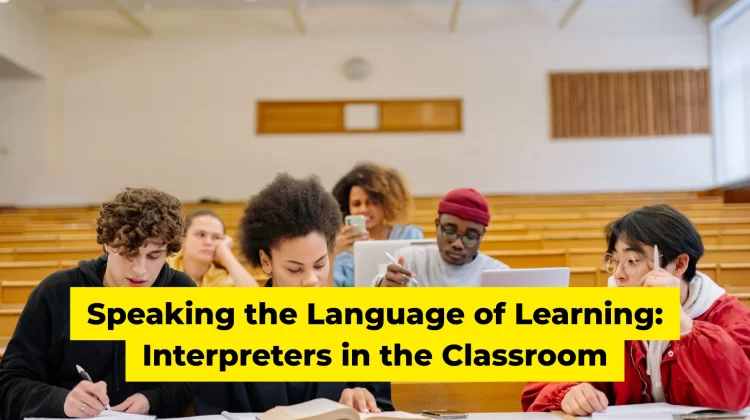
Speaking the Language of Learning: Interpreters in the Classroom
Schools today are more linguistically diverse than ever before. Students come from homes where multiple languages are spoken, and educators are challenged to ensure every child receives an equitable education. In this context, professional interpreters are critical. They help bridge language gaps between teachers, students, and families, ensuring that communication is accurate, inclusive, and effective. While their work often goes unnoticed, interpreters play a central role in shaping student success, parent engagement, and overall learning outcomes.
Why Interpreters Are Essential in Education
Language barriers in schools can have far-reaching consequences. Research from the National Center for Education Statistics shows that students who are English language learners (ELLs) consistently score lower on standardized tests and are more likely to face academic challenges. These gaps are often less about ability and more about access to information and clear communication.
Professional interpreters help to mitigate these challenges by facilitating clear communication between educators and non-English speaking families. They ensure that parents understand school policies, classroom expectations, and their child’s academic progress. For students, interpreters support comprehension in the classroom and enable participation in educational programs, extracurricular activities, and counseling services.
Studies show that when interpreters are properly integrated into educational settings, students demonstrate better engagement, higher attendance rates, and improved academic performance. This evidence highlights the critical role interpreters play in promoting equity and inclusion.
Common Challenges Schools Face Without Professional Interpretation
Family-Teacher Communication Barriers
Parent engagement is a key factor in student success. Families who cannot communicate with teachers may miss important updates, parent-teacher conferences, or guidance on how to support learning at home. Miscommunication can lead to misunderstandings about grades, behavior issues, or special education services.
Without professional interpreters, schools may rely on bilingual staff or family members. This approach can result in inconsistent information or errors. Parents may feel excluded or frustrated, which can negatively affect their involvement in their child’s education.
Student Support and Academic Progress
Students who do not speak the dominant language may struggle to understand instructions, participate in class discussions, or access learning materials. This is especially important in specialized areas such as special education or counseling, where precise communication is critical. Misunderstandings in these contexts can delay intervention, reduce the effectiveness of support services, and negatively impact student outcomes.
Professional interpreters ensure that students understand both academic content and instructions for assignments or assessments. They also allow educators to accurately assess student comprehension and progress, preventing errors caused by language barriers.
Risks of Ad Hoc Interpretation
Relying on ad hoc interpreters, such as staff or family members who are not professionally trained, is risky. A bilingual sibling translating for a parent may lack the ability to convey complex school policies or educational terminology accurately. This can lead to confusion, incomplete understanding, and missed opportunities for students.
Research indicates that professional interpreters significantly reduce communication errors compared to ad hoc solutions. Certified interpreters follow strict standards, including accuracy, impartiality, and confidentiality. They provide reliable communication that benefits both students and families.
Benefits of Professional Educational Interpreters
Enhancing Academic Performance and Comprehension
Interpreters directly impact student comprehension by facilitating communication in the classroom. When students can understand instructions and learning materials, they are more likely to participate actively, complete assignments, and engage with teachers. This support is particularly valuable for English language learners and students with disabilities who require precise explanations.
Research has shown that students who have consistent access to interpreters demonstrate better reading and math scores. This highlights the importance of professional language support in leveling the academic playing field.
Supporting Inclusive Learning Environments
Inclusive classrooms are not just about physical access. They require linguistic and cultural access as well. Professional interpreters ensure that all students and families can participate fully in the school community. They help schools celebrate linguistic diversity and create an environment where students feel seen and understood.
Inclusive environments foster confidence and motivation among students. When students feel understood and supported, they are more likely to take academic risks, ask questions, and engage in collaborative learning.
Reducing Misunderstandings and Fostering Trust
Trust between families and educators is critical for student success. Miscommunication can erode trust and leave parents feeling disconnected from their child’s education. Professional interpreters facilitate accurate and clear communication, building stronger relationships between schools and families.
Real-world examples include parent-teacher conferences where interpreters ensure parents understand academic goals, behavior plans, or special education services. Parents are more likely to support their children at home when they feel confident that they are receiving accurate information from the school.
Emerging Trends in Educational Interpretation
Technology has expanded the ways schools can provide interpretation services. Remote interpretation, including video and phone-based services, allows schools to reach parents who cannot attend in person. This is especially valuable for multilingual families, rural districts, or during virtual learning environments.
Digital tools and platforms are increasingly being used to coordinate interpreter schedules, provide real-time translation, and facilitate multilingual communication during school meetings and events. Research suggests that these innovations improve efficiency and reduce delays, making interpretation services more accessible to all families.
The demand for multilingual access continues to grow. Schools in diverse urban areas and rural districts alike are recognizing the importance of interpreters in promoting equity and compliance with federal laws such as Title VI of the Civil Rights Act, which ensures that individuals are not denied access to federally funded programs due to language barriers.
Case Studies and Real-World Applications
Several school districts have demonstrated the impact of professional interpreters. In one large urban district, the integration of certified interpreters in parent-teacher conferences resulted in a measurable increase in parent attendance and engagement. Teachers reported that they were able to convey more detailed feedback, and parents felt empowered to support learning at home.
In another example, a rural school serving a growing population of Spanish-speaking students implemented remote video interpretation for special education meetings. This approach allowed families to participate fully in individualized education plan discussions, ensuring that students received appropriate support. Student outcomes improved, and parents reported higher levels of satisfaction with school communication.
These examples highlight how interpreters not only support communication but also contribute to measurable academic and social outcomes for students.
Best Practices for Schools and Educational Institutions
Schools that successfully integrate interpreters follow specific best practices. Consistent use of certified interpreters ensures accuracy and reliability. Policies should require professional interpretation for meetings, conferences, and critical communications with families.
Training is also essential. Interpreters need ongoing professional development in educational terminology, ethical standards, and cultural competence. Educators should also receive guidance on working effectively with interpreters to maximize comprehension and engagement.
Compliance with federal and state regulations is critical. Title VI of the Civil Rights Act and the Individuals with Disabilities Education Act require that students and families have access to language services when needed. Schools that implement interpreters effectively are better positioned to meet these legal requirements and ensure equitable educational opportunities.
The Future of Interpretation in Education
As schools become increasingly multilingual, the demand for professional interpreters will continue to grow. Emerging technologies such as remote interpretation, AI-supported tools, and multilingual communication platforms will complement human interpreters and expand access.
Research is ongoing to evaluate the long-term academic impact of interpreter services, including improvements in test scores, engagement, and graduation rates. Early evidence suggests that consistent access to interpretation benefits students academically, socially, and emotionally.
Educators and administrators are recognizing that interpreters are not just a convenience but an essential component of effective teaching and learning. Schools that invest in interpreter services are better equipped to support all students, foster inclusion, and promote family engagement.
Conclusion: Partnering With Professional Language Services
Interpreters play a vital role in bridging the gap between students, families, and educators. They improve academic outcomes, foster trust, and ensure equitable access to education. Professional interpreters are essential partners in creating inclusive classrooms where every student can thrive, regardless of the language spoken at home.
Language service providers such as VM Language Access exemplify these best practices by offering certified interpreters and flexible services to support schools and families. By integrating professional interpreters into educational settings, schools can enhance communication, engagement, and learning outcomes for all students.
Recognizing the value of interpreters is essential. They do more than translate words; they empower students, strengthen family-school relationships, and help create educational environments where everyone can succeed.