
Smart Earbuds vs. Smart Humans: Why Real Communication Needs More Than Technology
In a world where technology keeps promising to make our lives easier, smart earbuds and real-time translation tools have become the newest gadgets to catch everyone’s attention. Apple’s AirPods and similar devices now claim to help people communicate instantly across languages. On the surface, it sounds like a dream come true. Imagine traveling to another country, asking for directions, ordering food, or chatting with locals without worrying about language barriers. It all seems too good to be true, right? Well, in many ways, it is.
When it comes to casual conversations, these tools might do the trick. But when the stakes are higher, such as in legal, medical, or business settings, relying on smart earbuds for translation can lead to major problems. Real communication is not just about words. It is about tone, culture, intent, and emotion. That is where professional interpreters like those at VM Language Access (VMLA) come in. They bring something no device can ever fully replicate: human understanding.
The Rise of Smart Translation Devices
Technology has taken major steps forward in the last decade, and the translation world has not been left behind. With apps and devices like Google Translate, Microsoft Translator, and Apple’s AirPods offering built-in translation features, global communication has become more accessible than ever.
You can now have a basic conversation with someone who speaks another language without carrying a dictionary or hiring a translator. For tourists or travelers who just need to find a restaurant or buy a ticket, this can be incredibly convenient. AI-driven translation devices have made these quick exchanges smoother and faster.
However, when you move beyond ordering coffee or asking for directions, things start to get complicated. These devices are great at translating individual words or simple phrases, but real communication is much more than that.
What Smart Earbuds Can and Can’t Do
The Strengths of AI Translation Tools
Let’s start with the positives. Smart translation earbuds are fast, easy to use, and often surprisingly accurate in simple scenarios. They can translate phrases in seconds, help you get through airport check-ins, or navigate basic conversations when traveling abroad. For everyday use, especially in informal situations, they are genuinely impressive.
These tools are also helpful for people learning new languages. Listening to instant translations can support learning vocabulary and pronunciation. AI has become a helpful companion for language learners, travelers, and anyone exploring new cultures.
The Limits of Literal Translation
But here is the catch: AI translation is literal. It does not think, feel, or understand. It cannot interpret tone or emotion, and it often misses cultural meaning. When someone says something sarcastic, makes a joke, or uses an idiom, smart earbuds usually fail to capture the intended meaning.
Imagine being in a business meeting where a client says, “Let’s table this discussion.” A literal translation might make it sound like they are suggesting placing something on a table, when in reality it means “let’s postpone this discussion.” Now picture that kind of misunderstanding happening in a legal case or a doctor’s office. The consequences can be serious.
AI translation tools also struggle with regional slang, dialects, and cultural nuances. Spanish spoken in Mexico is not identical to Spanish spoken in Spain or Argentina. Machines may translate words correctly but still fail to reflect how people actually communicate in a specific context.
The Human Element Technology Can’t Replace
Emotional Intelligence in Communication
Human interpreters bring something technology simply cannot replicate: empathy. They read body language, tone of voice, and emotional cues. When someone is nervous, upset, or hesitant, a professional interpreter adjusts their delivery to maintain clarity and sensitivity.
For example, in a hospital, an interpreter does more than translate symptoms. They ensure the patient feels understood and supported. In a courtroom, an interpreter not only repeats words but captures tone and intention, ensuring justice is served fairly.
Technology cannot do that. Machines do not understand emotion. They do not know when to pause, soften their tone, or adapt language to ease tension. Humans, on the other hand, do this naturally.
Adapting to Context and Culture
Another thing machines cannot manage well is cultural adaptation. Every culture has unspoken rules about politeness, respect, and communication styles. A professional interpreter knows when to switch to a formal tone, how to avoid offensive phrasing, and how to ensure that cultural references are appropriate for the audience.
For instance, in some cultures, directness is appreciated. In others, it can be seen as rude. A skilled interpreter navigates these differences seamlessly. Smart earbuds? They simply translate what they hear, without context or sensitivity.
When Miscommunication Has Real Consequences
In Healthcare and Emergency Settings
Miscommunication in healthcare is not just inconvenient; it can be dangerous. Imagine a patient explaining their symptoms using a regional term that a machine does not recognize. A mistranslation could lead to a wrong diagnosis or improper treatment.
Hospitals need trained interpreters who can ensure accuracy, compassion, and confidentiality. These professionals understand medical terminology and the emotional weight of a healthcare conversation. Machines cannot grasp that a single misunderstood phrase could affect someone’s well-being.
In Legal and Business Environments
In legal and business settings, one mistranslated word can change everything. Think of a contract, a deposition, or a negotiation where precision is critical. Smart earbuds may misinterpret terms like “liability” or “consideration,” causing confusion or even legal disputes.
VMLA’s interpreters, on the other hand, are trained to handle specialized terminology, tone, and context. They ensure that meaning, not just words, is conveyed accurately. That level of precision protects both reputations and results.
In Community and Education Programs
Schools, community programs, and social services also rely heavily on clear communication. If an interpreter or translator gets it wrong, it could affect a student’s education, a parent’s understanding of school policies, or a family’s access to essential resources.
VMLA’s interpreters ensure that every voice is heard and respected, regardless of language or background. They bring inclusion and understanding where technology falls short.
Why VMLA Interpreters Are Smart Humans, Not Just Translators
Cultural Navigators, Not Word Converters
At VM Language Access, interpreters are more than language experts. They are cultural navigators. Their goal is not only to translate words but also to make sure communication feels natural and respectful across cultures.
When you work with VMLA, you get interpreters who adapt to the situation, ensuring clarity and professionalism. They make sure everyone involved truly understands one another, building trust and eliminating barriers.
Professionalism, Ethics, and Confidentiality
One of the biggest concerns with AI-driven translation tools is privacy. Even when companies claim that your data stays “on device,” there are still risks of breaches or data misuse. Professional interpreters at VMLA are bound by strict confidentiality agreements and ethical codes.
This means sensitive information in medical, legal, or business contexts stays protected. Clients can communicate freely, knowing that privacy is respected at all times.
Tailored Communication for Every Setting
VMLA offers interpretation and translation services across industries. Whether it is a hospital, law firm, government office, or school, each setting requires different expertise. VMLA assigns linguists who specialize in the relevant field, ensuring accurate terminology and context.
This personalized approach makes a world of difference. Instead of generic translations, you get culturally appropriate communication that fits your organization’s specific needs.
Technology as a Tool, Humans as the Bridge
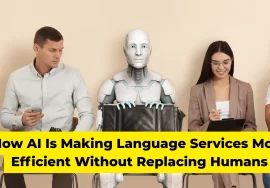
Technology is an incredible tool, but it is just that: a tool. It can help streamline workflows, speed up processes, and support interpreters. However, it cannot replace the human element.
AI can assist with terminology searches or quick reference translations, but human interpreters bring the understanding and empathy that make communication meaningful. Machines can process language, but humans build connection.
VMLA believes in combining the best of both worlds: leveraging technology for efficiency while relying on human expertise for accuracy and warmth.
Choosing the Right Partner for True Understanding
If your organization interacts with diverse communities, the right language partner makes all the difference. Here are a few things to look for when choosing a language service provider:
- Cultural and Linguistic Expertise – Make sure your provider understands not just language, but the cultural context behind it.
- Confidentiality and Ethics – Privacy is non-negotiable, especially in legal, healthcare, and government settings.
- Specialized Interpreters – Choose professionals with experience in your specific field.
- Flexibility and Accessibility – A good provider offers multiple interpretation modes, such as remote, on-site, and over-the-phone options.
- Reputation and Reliability – Look for reviews, testimonials, and proven experience.
VMLA meets all of these criteria. With a team of expert linguists and a commitment to excellence, the company ensures every interaction is accurate, respectful, and culturally aware.
Smart earbuds are impressive. They have made casual cross-language communication easier than ever. But when the conversation truly matters, when precision, empathy, and context are essential, there is no substitute for human interpreters.
VMLA’s interpreters bridge more than just language gaps. They build understanding, trust, and connection. They ensure that every word carries its true meaning, that every person feels heard, and that every organization communicates with confidence.
So next time you are tempted to rely on your earbuds for a “quick translation,” remember this: smart devices can translate words, but smart humans interpret meaning. And that is what real communication is all about.
VM Language Access stands ready to support you with professional interpreters and translators who understand that words are only part of the story. True communication happens when humans connect, not just when machines compute.