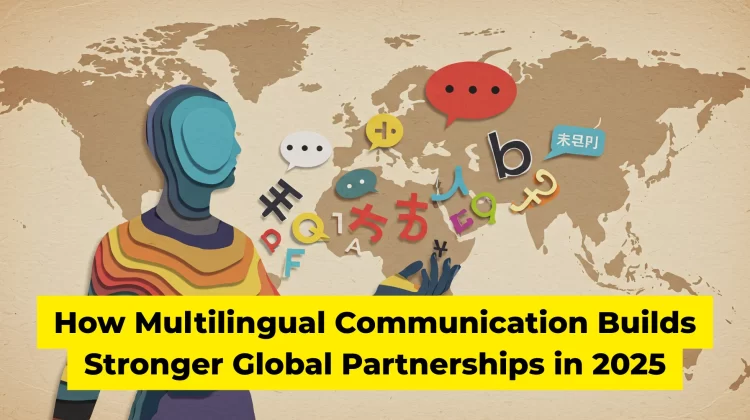
How Multilingual Communication Builds Stronger Global Partnerships in 2025
The world in 2025 looks more interconnected than ever before. Borders feel smaller, international teams are more common, and global collaboration has become an essential part of how organizations grow and innovate. Whether a company is expanding overseas, a nonprofit is serving multilingual communities, or a government agency is working with international partners, one core element makes these interactions successful. That element is multilingual communication.
It is not enough to translate a document or rely on a quick software tool. Real partnership requires real understanding. This means communicating clearly, respectfully, and accurately across languages and cultures. Multilingual communication strengthens relationships, builds trust, and creates a foundation where partners feel valued and confident. As we move deeper into 2025, this skill has become a key factor in global growth and cooperation.
In a world shaped by new technologies, shifting economies, and evolving cultural landscapes, the way we communicate across languages determines the success or failure of global connections. This is why organizations worldwide are rethinking how they approach language access. They are looking for solutions that are human centered, reliable, and culturally informed. VM Language Access steps into this need by offering flexible services that help organizations communicate with ease and accuracy.
The Role of Multilingual Communication in Modern Global Growth
Over the past decade, the global economy has shifted toward more international engagement. Companies no longer operate only in domestic markets. Even small teams may have clients in multiple countries, suppliers abroad, or employees who speak different languages. This transformation has created a real need for clear multilingual communication.
When businesses enter global markets, they face customers who expect to be spoken to in their native language. Research shows that people are more likely to trust a brand and make a purchase if they fully understand the message. This matters not just for marketing but also for onboarding, training, customer service, and operational processes.
For internal teams, multilingual communication supports stronger collaboration. When employees feel understood, respected, and well informed, they work more confidently. This strengthens productivity and cohesion. It also helps prevent misunderstandings that might come from unclear instructions or cultural differences.
As organizations expand across borders, they rely more heavily on accurate translation and culturally sensitive interpretation. These services help business leaders make informed decisions, negotiate successfully, and understand the needs of their partners. Without strong multilingual communication, a company may struggle to build lasting global relationships or maintain a steady presence in new markets.
How Multilingual Communication Strengthens Business Relationships
Trust is at the center of every partnership. When two companies from different countries or cultures work together, communication must be precise and respectful. Multilingual communication becomes a bridge that connects both sides and supports strong relationships.
Partners want to feel confident that they understand every detail of a discussion or contract. If language barriers get in the way, even a small misunderstanding can lead to delays, conflicts, or financial losses. Professional interpretation helps ensure that every interaction reflects the tone, purpose, and intent of the speaker.
Strong communication also increases loyalty. When partners see that an organization takes the time to communicate in their preferred language, it sends a clear message of respect. It shows that the company cares about building a long term relationship rather than simply completing a transaction.
In many cultures, tone and etiquette play an important role in business. Professional interpreters help navigate these subtleties by adjusting communication to fit cultural expectations. This helps both sides build stronger emotional connections and mutual respect.
The Diplomatic Power of Multilingual Communication
Beyond the business world, multilingual communication has a powerful impact on international diplomacy. In 2025, global cooperation is more important than ever. Countries must work together to address economic changes, health concerns, migration, climate challenges, and global security. Effective diplomacy depends heavily on clear and accurate communication.
Interpreters support diplomatic missions by ensuring that leaders fully understand each other. A single misinterpreted phrase can shift the meaning of a negotiation. With multilingual support, conversations remain clear and productive.
Multilingual communication also helps international organizations create policies that reflect the needs of diverse populations. When decision makers can understand the experiences of people from different regions, they can craft more effective and inclusive solutions.
The human element remains essential in diplomacy. Machines may translate words, but they cannot capture tone, emotion, empathy, or the subtleties of political language. Professional interpreters provide this level of emotional intelligence, allowing leaders to connect more authentically and resolve challenges more collaboratively.
Global Cooperation in 2025 and the Need for Precision
In 2025, more teams are working across continents. Virtual meetings have become a normal part of life. Remote collaboration has made it easier to connect with partners in different time zones and cultural contexts. This trend has created a new demand for precise multilingual communication.
AI tools can support basic translation needs, but they often struggle with complex terminology, cultural nuance, or sensitive discussions. When companies deal with technical information, legal contracts, or negotiations, they cannot take chances with inaccuracies. Human interpreters ensure that messages are precise and that context is correctly understood.
Another important factor is cultural fluency. Different cultures use language in unique ways. What sounds direct in one culture may seem aggressive in another. What feels polite in one region may be vague in another. Human interpreters adjust communication to match cultural expectations so both sides feel respected and heard.
Global cooperation also involves ethical responsibility. Organizations must ensure that information is handled with confidentiality and accuracy. Professional language experts follow strict ethical standards that protect client information, which is especially important in fields like medicine, law, and government.
How Multilingual Communication Drives Success
There are many real world examples that show how multilingual communication helps organizations succeed. Consider a company signing a large international deal. Without a professional interpreter, key terms might be misunderstood, which could lead to costly mistakes. With the right interpretation support, both sides feel secure and informed, creating a smoother negotiation and a stronger agreement.
Healthcare institutions also rely on multilingual communication. Patients must understand medical instructions clearly. When clinics and hospitals use professional interpreters, they provide better care, prevent medical errors, and improve patient satisfaction.
Educational institutions benefit as well. Schools with multilingual students often rely on interpreters to help families understand important meetings, programs, and opportunities. This creates a more inclusive environment and strengthens trust between schools and communities.
Government agencies working with diverse populations also depend on multilingual communication. When they offer clear translations of forms, instructions, and public services, communities feel supported and respected.
The Cultural Dimension of Effective Global Partnership
Cultural understanding is one of the most important parts of multilingual communication. Words do not exist in isolation. They carry meaning that depends on social norms, traditions, values, and history. In global partnerships, cultural intelligence helps avoid misunderstandings and promotes respectful collaboration.
Many languages have regional differences. A word may be polite in one country but inappropriate in another. Idioms may not translate directly. Humor often requires cultural context. Without this awareness, communication can become confusing or even offensive.
Human interpreters help navigate these challenges by choosing the right words and adjusting tone to match the situation. They understand body language, social expectations, and conversation styles. This skill transforms ordinary communication into meaningful connection.
Organizations that embrace cultural understanding stand out from their competitors. They build stronger relationships, improve customer engagement, and create a positive reputation in global markets. Cultural fluency has become a real strategic advantage in 2025.
Why Human Experts Matter in a Tech Focused 2025
Technology has become a powerful tool, but it cannot replace human expertise. Even the most advanced translation systems cannot fully understand emotion, sarcasm, intention, or cultural nuance. They often translate literally, which can change the meaning of a sentence entirely.
Human interpreters bring emotional intelligence to communication. They listen to tone, adjust phrasing for clarity, and make sure the message reflects the speaker’s intent. They also help manage sensitive moments by guiding communication in a respectful way.
In fields like law, healthcare, education, and government, accuracy is not optional. Mistakes can lead to legal problems, patient harm, or serious misunderstandings. Human experts ensure that every message is delivered correctly and respectfully.
Human interpreters also support relationship building. When partners speak through a trained professional, conversations feel smoother and more personal. This helps create a sense of connection that technology alone cannot achieve.
Tips for Companies Wanting to Strengthen Their Global Partnerships
Any organization can begin improving its global communication by following a few simple steps.
First, invest in consistent multilingual communication. Make sure documents, meetings, and customer interactions are accessible in the languages your partners use. This creates trust and prevents misunderstandings.
Second, build cultural awareness within your organization. Encourage employees to learn about cultural expectations, communication styles, and social norms. This helps your team engage more respectfully with international partners.
Third, use human experts for sensitive or complex topics. Negotiations, legal discussions, medical details, and strategic planning all require the precision that only trained interpreters can provide.
Fourth, combine technology with human language services. Simple tools may support easy tasks, but serious communication requires professional quality. A hybrid approach saves time while protecting accuracy.
These steps help any company create a stronger foundation for global growth.
Conclusion
Multilingual communication is more than a business strategy. It is a pathway to meaningful global partnership. In 2025, organizations that understand the power of clear, respectful, and culturally informed communication stand out as leaders in their fields.
By investing in professional interpretation and translation, companies build trust, strengthen relationships, and create long term opportunities for collaboration. Whether the goal is business expansion, diplomatic cooperation, community service, or global partnership, multilingual communication makes every connection stronger.
VM Language Access supports organizations across every step of this journey. With skilled professionals, cultural knowledge, and flexible services, VMLA helps clients communicate with confidence in a multilingual world.