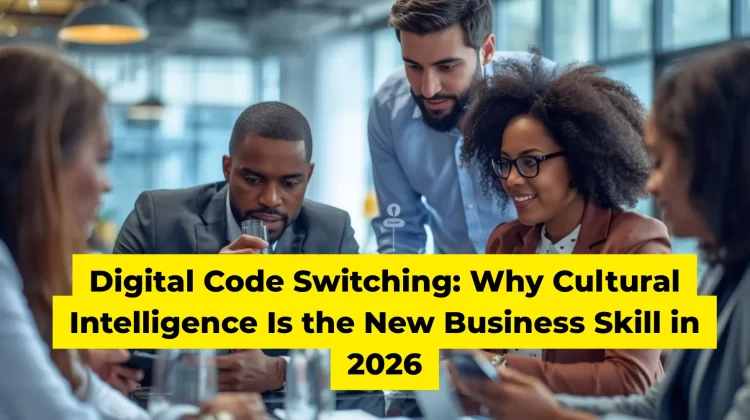
Digital Code Switching: Why Cultural Intelligence Is the New Business Skill in 2026
Communication Has Changed More Than We Realize
If you work in a global organization in 2026, chances are your workday includes emails, Slack messages, video calls, shared documents, text messages, and maybe even a few emojis. You might respond to a colleague in London in the morning, collaborate with a team in Mexico by noon, and finalize a presentation for a partner in Singapore before the end of the day.
On the surface, it all feels seamless. Technology connects us instantly. Translation tools are built into our devices. Remote work is normalized. But underneath this convenience lies a growing challenge. Digital communication across cultures is more complex than ever.
What feels clear and efficient to you might come across as abrupt, confusing, or even disrespectful to someone else. A simple thumbs up reaction, a short email, or a delayed response can carry very different meanings depending on age, culture, platform, and professional norms.
This is where digital code switching enters the conversation.
In 2026, cultural intelligence in business is no longer optional. It is a critical professional skill. The ability to adapt your communication style across cultures, generations, and digital environments is becoming one of the strongest predictors of leadership success.
What Is Digital Code Switching?
From Linguistic Code Switching to Digital Adaptation
Traditionally, code switching refers to the practice of shifting between languages or dialects depending on the social context. A bilingual professional might speak one language at home and another at work. They may also adjust vocabulary and tone when speaking to senior leadership versus close colleagues.
Digital code switching expands this idea. It is not only about changing languages. It is about adjusting tone, structure, visual cues, and platform behavior depending on who you are communicating with and where that communication is taking place.
For example, a concise message like “Noted.” may be perfectly acceptable in one workplace. In another, it may be perceived as cold or dismissive. A casual emoji might signal friendliness in one context and unprofessionalism in another.
Digital code switching requires awareness of these differences and the ability to adapt intentionally.
Adapting Tone and Format Across Platforms
Each digital platform carries its own cultural norms.
Email often implies formality and structure. Slack may encourage brevity and speed. LinkedIn tends to blend professionalism with personal branding. WhatsApp or Teams chats might feel more conversational.
Professionals who excel in global communication skills in 2026 understand that the same message cannot simply be copied and pasted across platforms. Tone must shift. Structure may need to change. Visual elements such as emojis or punctuation must be carefully considered.
Research from workplace communication studies shows that misunderstandings often occur not because of language errors, but because of mismatched expectations about tone and responsiveness. One team may expect immediate replies. Another may prioritize thoughtful responses over speed.
Digital code switching bridges these gaps.
Why Visual Language Is Not Universal
It is easy to assume that emojis, reaction icons, and GIFs are universal. After all, they are images rather than words. However, research in digital semiotics suggests otherwise.
Studies have found that emoji interpretation varies significantly across cultures and age groups. A thumbs up can signal agreement in one region and carry negative connotations in another. A simple period at the end of a short message can be perceived as neutral by some and hostile by others.
Visual language is shaped by context. Cultural background, platform norms, and generational habits all influence interpretation.
This is why localization and cultural awareness have expanded beyond marketing campaigns. They now influence internal corporate communication as well.
Generational Differences in Workplace Communication
How Different Age Groups Interpret Tone
One of the most fascinating developments in recent years is the rise of generational differences in workplace communication.
Research on generational differences in workplace communication shows that younger professionals often interpret digital brevity differently from older colleagues. Gen Z employees, for example, may perceive one word responses or minimal punctuation as emotionally distant. Millennials may see the same message as efficient and professional. Gen X leaders may value clarity over emoji use.
These differences are not about right or wrong. They reflect evolving communication norms shaped by social media, texting culture, and educational environments.
Understanding these patterns is part of developing cultural intelligence in business. Leaders who recognize generational communication styles can create clearer guidelines and reduce internal friction.
The Risk of Misreading Digital Cues
Digital environments lack many of the nonverbal signals present in face to face conversations. Facial expressions, tone of voice, and body language provide context that written messages do not.
As a result, people often fill in the gaps with assumptions. A delayed response might be interpreted as disinterest. A short reply might be seen as irritation. Excessive punctuation might be perceived as sarcasm.
When communication occurs across cultures and age groups, these assumptions multiply. Misinterpretation can affect team morale, productivity, and even retention.
Digital code switching involves slowing down enough to consider how a message might be received, not just how it is intended.
Cross Cultural Differences in Digital Etiquette
High Context and Low Context Communication
Cultural communication frameworks help explain why misunderstandings occur. Anthropologist Edward Hall introduced the concept of high context and low context cultures.
In high context cultures, much of the meaning is embedded in relationships, shared understanding, and indirect cues. In low context cultures, communication tends to be explicit and direct.
In digital communication across cultures, these differences become amplified. A direct email from a low context communicator may seem blunt to someone from a high context culture. An indirect message may seem unclear to someone who expects straightforward instructions.
Recognizing these patterns helps professionals adjust their approach.
Localization and Cultural Awareness in Corporate Communication
Localization is often associated with marketing campaigns or product adaptation. However, internal communication also benefits from localization and cultural awareness.
Global organizations increasingly develop communication guidelines that address tone, formality, response time expectations, and emoji usage. Some companies conduct internal audits to identify potential friction points in cross border communication.
Real world examples show that small adjustments can significantly improve collaboration. For instance, providing written follow ups after meetings helps ensure clarity for non native speakers. Offering language training or cultural workshops reduces misinterpretation in multinational teams.
Cultural intelligence in business is not about memorizing etiquette rules. It is about cultivating curiosity and flexibility.
Cultural Intelligence as a Leadership Skill
Defining Cultural Intelligence
Cultural intelligence, often abbreviated as CQ, refers to the ability to function effectively across cultural contexts. It includes cognitive understanding of cultural differences, motivational interest in engaging with diverse groups, and behavioral flexibility in adapting communication.
Research published in organizational psychology journals links high cultural intelligence to improved leadership effectiveness, better negotiation outcomes, and stronger team performance.
In 2026, as remote work and global partnerships continue to expand, cultural intelligence is increasingly viewed as a core leadership competency.
The Economic Value of Avoiding Digital Missteps
Miscommunication has measurable costs. Studies from global consulting firms estimate that poor communication can reduce productivity, increase employee turnover, and damage client relationships.
In global business environments, digital misunderstandings can delay projects, derail negotiations, and harm brand reputation. The economic value of avoiding digital missteps is significant.
Organizations that invest in training for global communication skills in 2026 are not simply promoting inclusivity. They are protecting operational efficiency and financial performance.
Remote Work and the Globalization of Teams
Distributed Teams and Increased Complexity
Remote and hybrid work models have accelerated globalization within organizations. Teams are no longer limited by geography. This creates tremendous opportunity, but also complexity.
Time zone differences, language diversity, and varying cultural norms intersect in daily communication. Digital platforms become the primary environment for collaboration.
Without deliberate strategies, misunderstandings can accumulate.
The Rise of Structured Communication Policies
Forward thinking organizations now implement structured communication policies. These may include guidelines on response times, meeting etiquette, written clarity standards, and inclusive language practices.
Some companies incorporate cultural intelligence training into leadership development programs. Others create internal knowledge resources that address digital communication across cultures.
These efforts reflect a growing recognition that global communication skills in 2026 are strategic assets.
Practical Strategies to Develop Digital Code Switching Skills
Conduct Communication Self Assessments
Professionals can begin by reflecting on their own habits. How do you typically respond to emails? Do you rely heavily on emojis? Are your messages concise or detailed?
Awareness is the first step toward adaptation. Consider how your communication might be interpreted by someone from a different cultural or generational background.
Seek Feedback Across Cultures
Constructive feedback from colleagues in different regions or age groups can reveal blind spots. Simple questions such as “Is my communication clear and appropriate for our team?” can open valuable dialogue.
Invest in Cultural Intelligence Training
Many organizations now offer training programs focused on cultural intelligence in business. These programs combine research based frameworks with practical scenarios.
Workshops often explore case studies involving digital miscommunication, negotiation challenges, and cross cultural collaboration. This hands on approach helps translate theory into practice.
Encourage Clear and Inclusive Writing
Clarity reduces ambiguity. Writing in plain language, avoiding idiomatic expressions, and summarizing key points can support understanding across linguistic backgrounds.
Inclusive writing also considers accessibility. For example, avoiding excessive slang or culturally specific references can prevent confusion.
The Future of Global Communication Skills in 2026 and Beyond
Digital communication will continue to evolve. Artificial intelligence tools may assist with translation, tone analysis, and grammar correction. However, technology cannot fully replace human judgment.
Human professionals interpret context, emotion, and relationship dynamics. They understand when a direct approach is appropriate and when a more nuanced message is needed.
Digital code switching is not about abandoning authenticity. It is about expanding your communication repertoire to meet diverse audiences where they are.
As globalization deepens and generational shifts reshape workplace norms, cultural intelligence in business will likely become as fundamental as technical expertise.
Aligning With Best Practices in Language and Cultural Strategy
Organizations seeking to strengthen digital communication across cultures often partner with language service providers that prioritize localization and cultural awareness. While strategies vary, best practices typically include professional translation, cultural consultation, and ongoing training.
VM Language Access is one example of a language service provider that aligns with these principles, supporting multilingual communication through structured, culturally informed approaches.
Digital code switching represents a shift in how we think about communication. It is no longer sufficient to focus solely on grammar or vocabulary. Professionals must consider tone, platform, generational context, and cultural background.
In 2026, global communication skills are intertwined with leadership, economic resilience, and organizational success. Cultural intelligence in business is not a trend. It is a response to the realities of a connected world.
The question is not whether digital communication across cultures will become more complex. It already has. The real question is whether professionals and organizations will invest in developing the awareness and flexibility required to thrive.
Those who do will not only avoid missteps. They will build stronger partnerships, foster trust across borders, and position themselves for long term success in a truly global economy.